
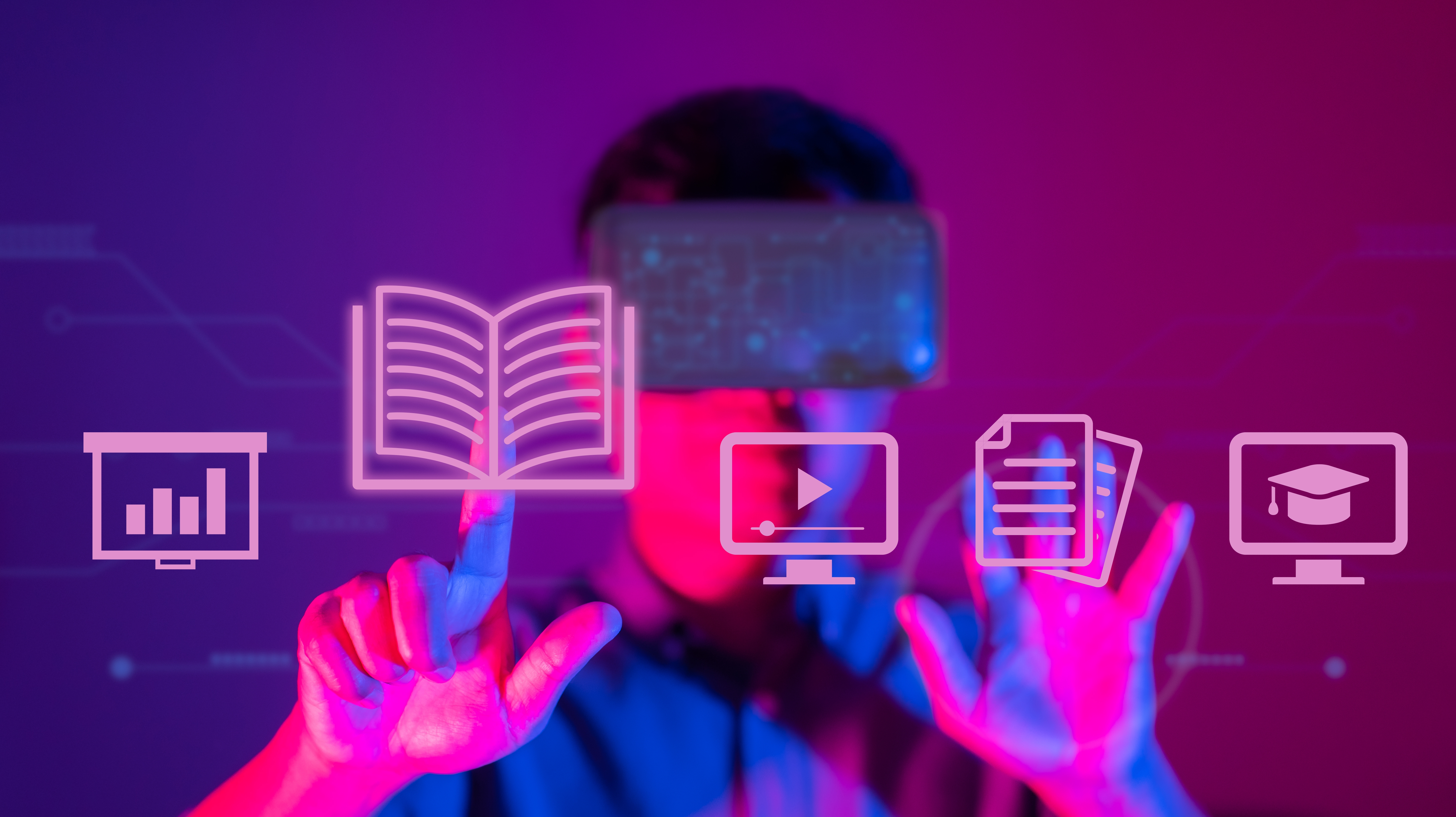
Immersive learning isn’t new, but technology has taken e-learning to an entirely new level. Virtual reality (VR) and augmented reality (AR) are turning traditional learning into interactive, real-world digital experiences that engage learners like never before.
For decades, immersive learning has been used to master practical skills, from fire safety drills to emergency evacuation exercises. The difference today is that VR and AR can simulate real-life scenarios in a safe, controlled digital environment. Learners aren’t just watching or reading; they’re actively practising and applying their skills in realistic settings.
In both corporate training and education, immersive learning is opening up opportunities to make learning more engaging, memorable, and effective.
What Is Immersive Learning?
Immersive learning is about learning by doing and it is a type of behavioural science with the idea that repetition and hands-on practice helps retain knowledge and refine skills. Role-playing and simulation exercises have long been used in training, but AR and VR bring these exercises into a fully interactive digital world.
Immersive learning is used for hard skills like technical processes, operational procedures, or even learning to fly a plane. It’s also effective for soft skills, such as leadership, customer service, and managing difficult conversations.
Studies from PwC show that learners using VR completed training up to four times faster than those in traditional classroom settings. Participants also reported being 40% more confident applying their new skills in real-world situations after VR training.
The Technology of Immersive Learning
What makes immersive learning so compelling is the sense of actually being in the environment. Creating that experience requires expertise.
- Instructional design helps structuring learning experiences effectively
- UX and UI design in making interactions intuitive
- Data science for personalising and analysing learning progress
- Sound and media design help with creating realistic, engaging environments
Learners enter these virtual worlds through VR headsets, desktops, or mobile apps. They interact with digital versions of tools, virtual human avatars, and lifelike environments. The result is a learning experience that’s engaging, memorable, and as close to reality as possible.
The rise of the metaverse promises even more possibilities. As physical and digital worlds merge, learners and educators will be able to interact, practice, and explore immersive environments in ways that were previously unimaginable, all from their own homes.
What’s the Difference between VR and AR?
Virtual Reality (VR) creates fully immersive experiences that are delivered through a headset. You can see, hear, and interact with a digital world as if they were really there. VR is particularly effective for situations where real-life practice is risky or costly.
Augmented Reality (AR) adds digital elements to the real world. It overlays images, videos, or 3D models onto physical environments. It’s more accessible than VR, as it doesn’t require specialised equipment.
Both VR and AR are transforming the way organisations teach skills, engage learners, and deliver training content.
Building Effective Immersive Learning Environments
While immersive learning is exciting, creating it effectively takes planning.
Choose the right technology
Consider your budget, physical space, and learning objectives. Technology should support outcomes. If you introduce it just for the sake of it, it can be ineffective and expensive.
Focus on the learner
People will have different levels of tech confidence. Keep sessions short (15–20 minutes) and accessible, including support for learners with disabilities. Unlike traditional classroom learning, immersive learners control their experience.
Blend with digital learning
Combining immersive experiences with online modules lets learners practice at their own pace and revisit content as needed.
Enhancing Digital Learning with Immersive Learning
Immersive learning can boost focus, engagement, and retention. Learners can actively practise in real-life situations, make mistakes safely, and repeat exercises as needed.
Unlike traditional online learning, immersive environments remove distractions. No open tabs, notifications, or interruptions, just learners fully engaged in the task. This combination of practice-based learning and self-paced digital access makes for an excellent training tool.
Challenges of Immersive Learning and How to Overcome Them
While immersive learning is transformative, it comes with some challenges.
Technology Adoption & Accessibility
Not all learners are comfortable using VR or AR technology. Overcome this by providing clear instructions, beginner-friendly tutorials, and short sessions to build confidence. Some learners may have physical or cognitive limitations that require adaptive technology or support. Plan for accessibility from the start to ensure everyone benefits.
Cost Considerations
VR headsets, AR devices, and development software can be expensive. Start with pilot programs or mobile-based AR experiences to keep costs manageable while still delivering impact
Content Design
Immersive learning experiences need to be well-structured. Poorly designed simulations can frustrate learners or fail to achieve learning outcomes. Collaborate with designers and experts to create engaging, realistic scenarios.
Scalability and Integration
Ensure immersive learning can integrate with existing Learning Management Systems (LMS) and workflows. Start small, collect feedback, and scale gradually to maintain quality and consistency.
Immersive Learning at Instinct
At Instinct, we are committed to deepening our knowledge of immersive learning. We staff the UK’s largest ever eLearning programme and strive to partner employers with high-quality digital talent, from design to development.
Ready to transform your digital learning strategy? Talk to one of our experts today or submit your CV.
Frequently asked questions
Can immersive learning replace traditional classroom training?
Not exactly. Think of immersive learning as a powerful addition to your existing training, rather than a replacement. It works best when paired with other digital or in-person learning, letting learners practise real-world scenarios that build on what they’ve already studied.
Is VR suitable for all learners?
VR can be great for most people, but not everyone feels comfortable wearing a headset or using immersive tech right away. Shorter sessions, clear tutorials, or AR alternatives can help make sure everyone gets involved and benefits from the experience.
How much does immersive learning cost to implement?
That depends on the type of technology and how big your programme is. Mobile-based AR tends to be more affordable, while full VR setups with headsets and custom simulations require a bigger investment. A good approach is to start small with a pilot, see the results, and then scale up.
How long should a VR or AR session last for optimal learning?
Keep it short and focused. Around 15–20 minutes is usually ideal, enough time for meaningful practice without overwhelming the learner. This keeps engagement high and helps information stick.
Can immersive learning be applied in soft skills training?
VR and AR aren’t just for technical tasks, they’re perfect for practising communication, leadership, and problem-solving. Learners can rehearse difficult conversations, customer interactions, or job interviews in a safe, risk-free environment.
Related Posts